Resume summary: how to write one that actually gets you interviews (with examples)

Write a resume summary that grabs attention fast. Learn the formula, avoid common mistakes, and adapt real examples for any career stage. Start yours today.
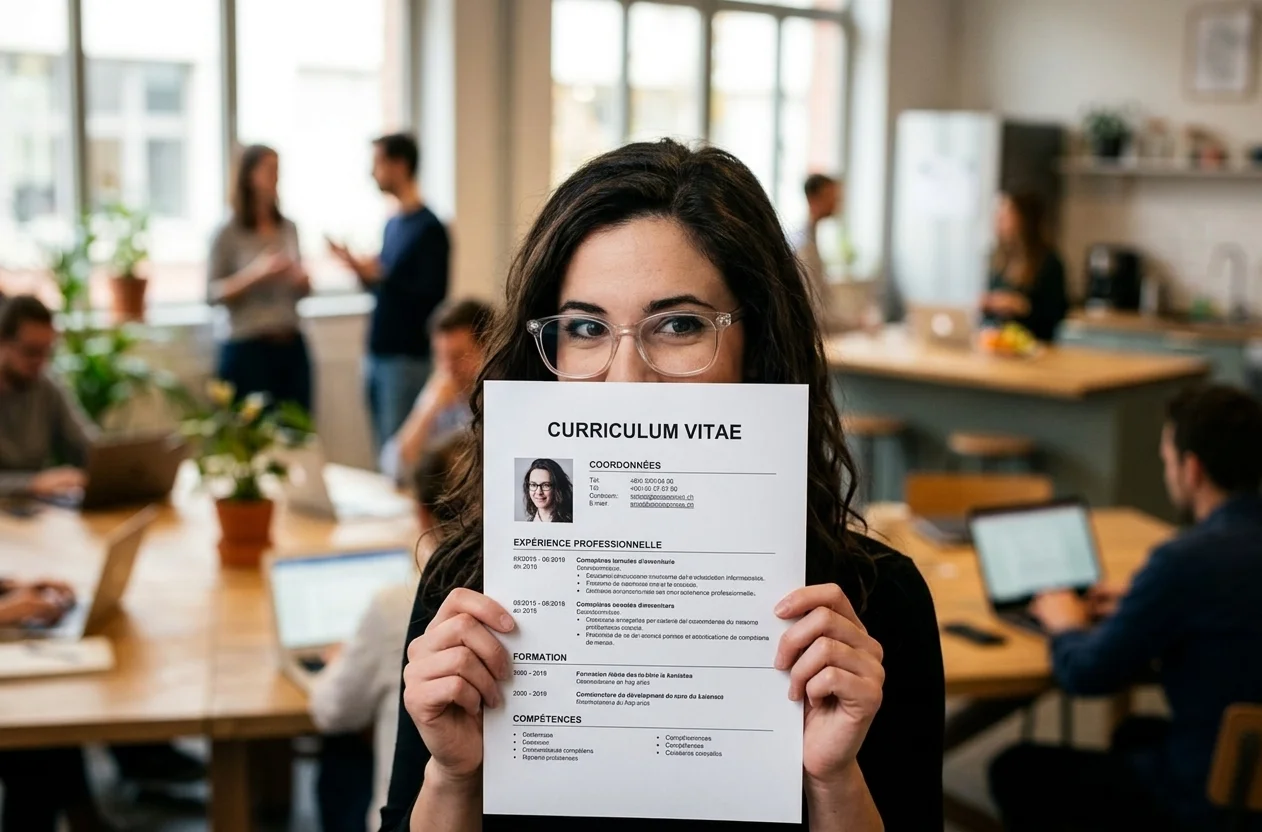
Photo by Nano Banana 2
Introduction
You've spent hours polishing your resume, and yet it keeps disappearing into the void. Recruiters glance at the top of the page for a few seconds, decide whether you're worth their time, and move on. The little block of text doing most of that heavy lifting? Your resume summary.
This guide breaks down what a resume summary really is in 2026, how to write one that grabs attention without sounding like everyone else, and what to do in tricky situations like career changes, employment gaps, or freelance work. You'll also get example summaries you can adapt and a clear sense of what hiring managers actually look for.
What a resume summary really is
A resume summary is a short paragraph (usually 3 to 5 lines) that sits right under your name and contact details. Its job is simple: tell a recruiter who you are, what you bring, and why you're a strong match for this specific job - fast.
Think of it as the trailer for your resume. It's not a recap of your life story, and it's not a wish list of dream roles. It's a focused pitch that combines your current job title, your years of experience, two or three key skills, and one concrete achievement that proves you can deliver.
A small but important note: a resume summary is not the same thing as your LinkedIn About section. LinkedIn lets you be more personal, more conversational, even a little playful. A resume summary stays tight, factual, and tailored to one job at a time.
Resume summary vs. resume objective: which one belongs on your resume
Here's the short version. A resume summary highlights what you've already accomplished. A resume objective states what you're looking for next. In 2026, summaries win in almost every situation - recruiters care more about what you can do for them than what you want from them.
The exception is if you have very little experience or you're switching fields entirely. In those cases, a hybrid works best: open with a line about your background, then pivot to what you're aiming for and why your skills transfer. We'll come back to this when we talk about career changers below.
The anatomy of a strong resume summary
A summary that performs well almost always contains four ingredients in this order: your professional identity, the scope of your experience, a standout achievement (with numbers), and two or three skills tied to the job description.
Here's the formula laid bare:
[Job title] with [X years] of experience in [industry/specialty]. [One concrete achievement with a number]. Skilled in [skill 1], [skill 2], and [skill 3], with a focus on [what makes you valuable to this employer].
Notice what's missing: words like "passionate," "hard-working," "team player," or "results-driven." Every candidate claims those things. Hiring managers tune them out within a fraction of a second. Replace adjectives with evidence - numbers, named tools, recognisable employers, specific outcomes.
How long should your resume summary be
Three to five lines. That's roughly 50 to 80 words, or 2 to 4 sentences. Anything longer and you're writing a cover letter; anything shorter and you're wasting prime real estate.
If you have under five years of experience, lean toward the shorter end. If you're a senior professional with 15+ years and a wide range of accomplishments, you can stretch to 5 or 6 lines, but only if every sentence pulls its weight.

How to write your resume summary in 5 steps
Write it last. Seriously. Once the rest of your resume is done, the strongest material rises to the surface naturally.
- Read the job description twice and underline 5 to 8 keywords or phrases that come up repeatedly (specific tools, certifications, soft skills, responsibilities).
- Open with your title and experience scope. Match the job title to the role you're applying for, not necessarily your current one - within reason.
- Pick one achievement that proves you can deliver what they're hiring for. Quantify it: percentage, dollar amount, team size, time saved.
- Layer in 2 or 3 skills that mirror the language of the job description. This helps both the human reader and the applicant tracking system.
- Cut ruthlessly. Read it out loud. If a phrase sounds like corporate filler, delete it.
Also read: Resume skills section: how to write one that actually gets you interviewed
Resume summary examples you can adapt
Here are four examples for common situations. Use them as scaffolding, not as templates to copy word-for-word.
Mid-level marketing manager Marketing manager with 6 years of experience scaling B2B SaaS campaigns. Increased qualified leads by 47% in 12 months by rebuilding the inbound funnel and launching three integrated content campaigns. Skilled in HubSpot, paid social, and conversion copywriting, with a track record of aligning marketing and sales teams around shared revenue goals.
Senior software engineer Senior software engineer with 10+ years building distributed systems for fintech and healthtech companies. Led the migration of a legacy monolith to microservices, reducing deployment time from 4 hours to 12 minutes. Strong in Go, Kubernetes, and AWS, with a focus on observability and team mentorship.
Recent graduate (entry-level) Recent business analytics graduate (BSc, first-class honours) with internship experience at a fintech startup, where I automated weekly reporting and saved the team 8 hours per week. Skilled in SQL, Python, and Tableau, looking to apply quantitative analysis to support product decisions in a data-driven team.
Career changer (teacher to UX researcher) Former secondary school teacher with 7 years of experience designing curricula and analysing learner behaviour, now transitioning into UX research after completing the Google UX certificate. Conducted three end-to-end research projects, including usability testing and contextual interviews. Skilled in qualitative analysis, stakeholder communication, and turning messy human insights into clear product recommendations.
Special cases hiring managers see all the time
Resume summary with no experience
Lead with your education or relevant projects, name the skills you've already built (group projects, freelance gigs, volunteering), and state what you're aiming for. The trick is to sound capable, not apologetic. You don't need to mention what you lack - focus on what you bring.
Also read: How to write a resume with no experience: a practical guide for first-time job seekers
Resume summary for career changers
Acknowledge your previous field in one short phrase, then pivot quickly to transferable skills and concrete proof you've already started moving. A bootcamp, a certification, a freelance project, a side initiative - anything that shows you're not just thinking about the change, you're doing it.
Also read: Career change resume: how to rewrite yours and actually get interviews
Resume summary with employment gaps
Don't draw attention to the gap inside the summary itself. Lead with your most recent relevant experience, then mention any skills, freelance work, courses, or caregiving responsibilities you handled during the break. Most recruiters in 2026 don't penalise reasonable gaps - they penalise gaps you try to hide awkwardly.
Resume summary for freelancers
Frame yourself as a professional, not a series of disconnected gigs. Use a clear umbrella title ("freelance content strategist," "independent product designer"), state how many clients or projects you've delivered, and name 2 or 3 marquee names if you have them. Quantify outcomes the same way an employee would.

ATS optimisation: making your summary keyword-friendly without sounding robotic
Applicant tracking systems in 2026 are smarter than they were five years ago, but the basics still apply. Use the exact phrasing from the job description when it matches your reality. If they say "stakeholder management," don't write "managing people across teams." If they ask for "Salesforce," don't write "CRM software."
That said, don't keyword-stuff. ATS systems now flag unnatural repetition, and human recruiters spot it instantly. The goal is to mirror the job ad's language two or three times across the summary, not to cram every keyword into one paragraph.
Save your tailored summary as part of a master version of your resume, then tweak it for each application. It takes 5 minutes and can double your interview rate.
Common mistakes to avoid
Most weak summaries fall into one of these traps:
- Listing personality traits instead of evidence. "Passionate, dedicated, results-oriented" tells me nothing.
- Recycling the same summary for every job. Recruiters can smell a generic summary in three seconds.
- Writing in the third person. "John is a marketing manager who…" reads as dated and stiff. First person (implied - drop the "I") is the modern standard.
- Burying the achievement. If your strongest number is in line 4, move it to line 2.
- Using buzzwords without backing them up. "Synergy," "leverage," "thought leader" - unless you can prove it, leave it out.
Jolicv's little nudge Writing a great resume summary is much easier when you can see it sitting inside a clean, well-designed resume. Build yours on Jolicv in a few minutes - pick a template you love, drop in your summary, and tweak as you go.

Conclusion
Your resume summary is the first impression you control, and a few well-chosen lines can be the difference between landing in the interview pile and the rejection folder. Keep it short, specific, and tailored to the job in front of you - concrete achievements with numbers, two or three relevant skills, and zero filler. Whether you're a recent graduate, a career changer, or a senior professional, the principle is the same: prove you can deliver, fast. Now go write the version of your summary that actually sounds like you.
Get started!
Build beautiful, ATS-friendly resumes that get you hired. No design skills required.
No credit card required.
Frequently asked questions
How do I write a resume summary when I have employment gaps?
Focus your resume summary on your skills and achievements, not your timeline. Lead with your strongest results, then highlight any freelance work, courses, or volunteering done during the gap. Recruiters care most about what you bring — so put that front and centre and address the gap briefly in your cover letter instead.
How do I write a resume summary as a freelancer or self-employed professional?
Frame your resume summary around outcomes, not job titles. Name the types of clients you've served, the problems you've solved, and the results you've delivered — with numbers where possible. You can use a title like 'Independent Marketing Consultant' to anchor your identity clearly before diving into your strongest achievements.
Does a resume summary need to change depending on where I apply — LinkedIn, job boards, or direct?
Yes, your resume summary should shift slightly per channel. On LinkedIn, you can afford a warmer, slightly more conversational tone. On job boards, mirror the job description's exact keywords closely for ATS. For direct applications, tailor your summary tightly to the company's stated priorities and culture — it signals genuine research and intent.
What do recruiters actually think when they read a resume summary?
Recruiters scan your resume summary in seconds looking for three things: relevance to the role, evidence of real results, and clarity. Vague phrases like 'results-driven professional' are mentally skipped. What stops them is a specific number, a recognisable tool, or a named employer — something concrete that proves you can do the job.
Are there industries where a resume summary is less effective?
In highly portfolio-driven fields like graphic design, architecture, or UX, your resume summary matters less than your work samples. Recruiters jump straight to the portfolio. That said, a tight two-sentence summary still helps frame your experience — just keep it brief and point the reader toward your work as quickly as possible.
How does a resume summary differ between the US, UK, and Australia?
In the US, resume summaries tend to be punchy and metric-heavy. UK summaries are often slightly more formal and may use a third-person tone, though first-person is becoming standard. In Australia, a direct, no-fluff style is preferred — similar to the US. Always spell-check for regional spelling differences like 'organisation' versus 'organization.'
What words should I avoid in my resume summary to pass ATS screening?
Avoid vague filler words like 'passionate,' 'dynamic,' 'hardworking,' and 'synergy' — ATS systems and recruiters alike flag these as low-signal. Instead, prioritise specific skill names, tools, certifications, and action verbs that mirror the job description. Matching the employer's exact language is the most reliable way to clear automated screening.