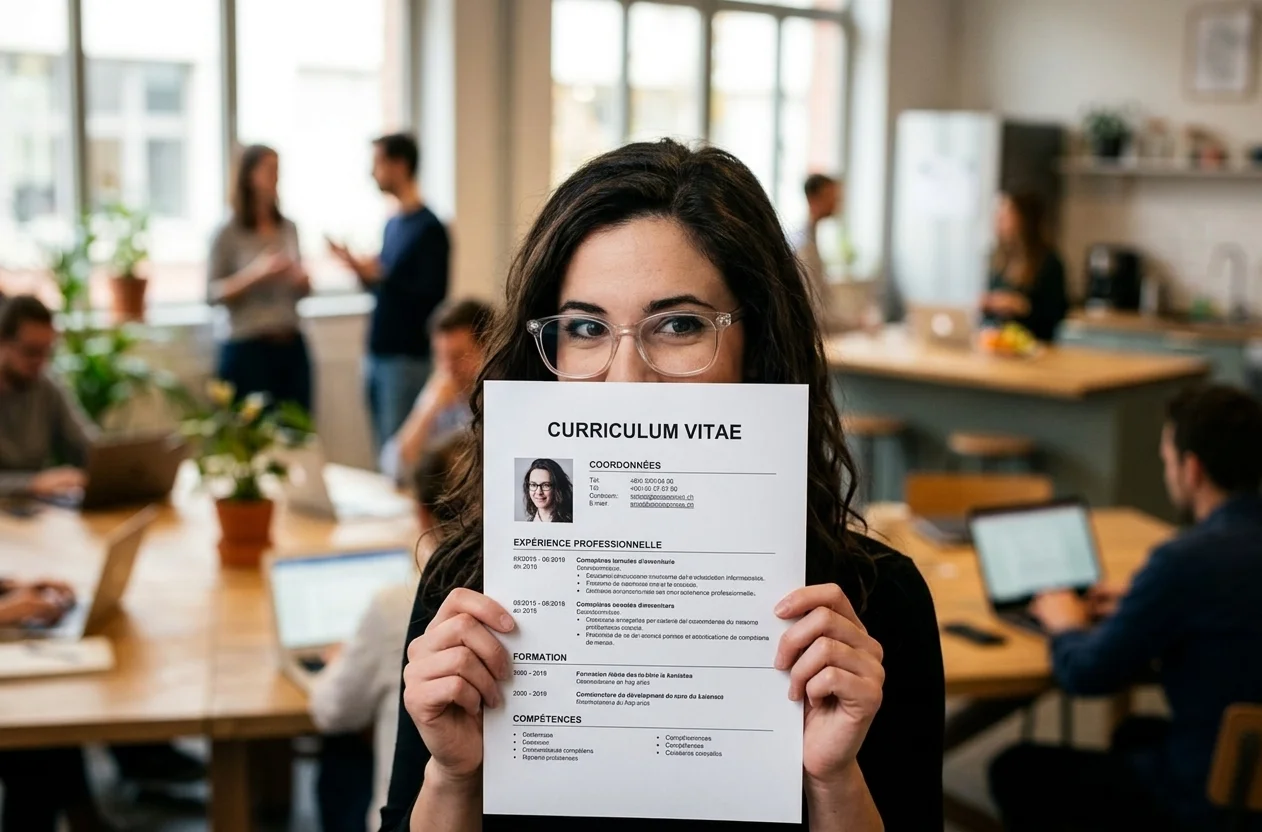
Photo on resume: should you include one in 2026?

Decide whether a photo on resume hurts or helps your chances. Learn when to skip it, when it's expected, and how to take a great headshot. Read the full guide.
Photo by Nano Banana 2
Introduction
You've polished your bullet points, tightened your summary, picked a clean template, and now you're staring at the top corner of your resume wondering: should I drop a photo there or not? It feels like a tiny decision, but it sits right at the entrance of your application, and the wrong call can quietly cost you interviews.
This guide gives you a clear answer based on where you're applying, what industry you're in, and how modern recruiting actually works in 2026. You'll also get practical tips if you do decide to include a photo on your resume - and smarter alternatives if you don't.
The short answer: in most English-speaking markets, skip it
If you're applying in the United States, Canada, the United Kingdom, Ireland, Australia, or New Zealand, leave the photo off. The reason isn't aesthetic, it's structural: anti-discrimination frameworks (the EEOC in the US, the Equality Act in the UK, Canadian Human Rights legislation) push employers toward "blind" screening. Many recruiters in these markets are trained to discard or anonymise resumes with photos before passing them to hiring managers, precisely to protect the company from bias claims.
So even if your headshot is gorgeous, it can trigger a bureaucratic reflex that pushes your resume to the bottom of the pile or gets it stripped of its visual identity altogether. You lose space, you gain risk, and you don't get any compensating benefit.
In continental Europe, large parts of Asia, Latin America, the Middle East and Africa, the norm is different - a photo is often expected, sometimes required. If you're applying in Germany, France, Spain, China, or Brazil, a clean professional headshot is part of the standard package.
What about ATS and AI screening in 2026?
This is where competitor advice gets outdated fast. Modern applicant tracking systems don't "crash" on a photo the way older versions sometimes did, but they still parse text far better than images. When an ATS converts your PDF into structured data, an embedded photo can confuse the layout parser, push your name or contact info into the wrong field, or simply waste parsing budget.
AI-powered screening tools layered on top of ATS platforms now do something extra: many of them deliberately ignore or mask images during the first pass to keep the screening "fair." That means your photo doesn't help the algorithm decide anything - it just takes up real estate that could be carrying keywords the AI is actually looking for.
The practical takeaway: if your application goes through any kind of online portal, a no-photo version is almost always the safer bet. Save the visual identity for your LinkedIn profile, where it belongs and where it's expected.
Also read: how to build a resume skills section that actually gets you interviewed.
When a photo on your resume genuinely helps
There are real exceptions, and they're worth naming clearly.
Performance and appearance-based roles. Acting, modelling, dancing, on-camera presenting, hosting - your look is part of the deliverable, so a headshot (or a separate comp card) is expected.
Customer-facing roles in countries where photos are the norm. Hospitality, front-of-house, real estate, sales roles in markets like France, Germany, Italy, or much of Asia. Trust and recognisability are part of the value you bring.
When the employer explicitly requests it. Some application forms ask for it directly. Comply, but use a proper headshot, not a cropped holiday picture.
Direct outreach to a hiring manager. If you're emailing a founder or a small-team lead directly (not applying through a portal), a discreet photo can humanise your message. Read the room: a tech startup founder may appreciate it, a corporate legal recruiter probably won't.

The creative-sector nuance nobody talks about
If you're a graphic designer, UX designer, illustrator, or art director applying in the US or UK, you sit in an awkward middle ground. Your resume itself is a design artefact - it's evidence of your taste. A well-integrated photo can signal visual confidence; a clumsy one screams the opposite.
Two reasonable approaches here. Either skip the photo on the resume and let your portfolio link carry the visual identity, which is the cleaner play for most agency and in-house design roles. Or, if you do include one, treat it as a deliberate design element: tight crop, consistent colour palette with the rest of the document, integrated with your typography rather than slapped in the corner.
The same logic applies to personal brands - coaches, consultants, content creators - where your face IS the product. In that case, your resume is probably less central than your website anyway.
How to take a resume photo that doesn't sabotage you
If you've decided a photo belongs on your resume, the bar is "looks like a professional in your industry on a normal Tuesday." Not glamour shot, not LinkedIn-influencer, not driving-licence mugshot.
A few principles that actually matter:
- Frame. Head and shoulders, face filling roughly half to two-thirds of the frame. Eyes on the camera or just slightly off.
- Background. Plain, light, slightly out of focus. A neutral wall works perfectly.
- Light. Soft, even, coming from in front of you - not from above (raccoon eyes) or behind (silhouette). A window on a cloudy day is free studio lighting.
- Outfit. Match the dress code of the job you're applying for, one notch up.
- Expression. Relaxed, slightly smiling. Not laughing, not stern, not duck-face.
A friend with a recent phone and ten minutes of patience can produce something perfectly usable. You don't need a professional photographer unless you want one.
Crucial detail: use the same photo on your LinkedIn profile. Recruiters check both, and consistency builds trust. A different headshot in each place creates a tiny dissonance that registers, even unconsciously.

Smart alternatives to a photo
If you want the human-touch benefit without the risks, you have options.
The most effective: a polished LinkedIn profile, with the URL prominently in your resume header. The hiring manager who wants to see your face can find it in two clicks, and you stay compliant with anonymous-screening processes. For creative fields, swap LinkedIn for your portfolio URL or personal site.
A strong, specific resume summary does more for your candidacy than a photo ever will. So does a sharp skills section tuned to the job. Personality comes through your words, your achievements, the texture of how you describe what you've done. That's what hiring managers actually read.
If you're changing careers, invest your resume real estate in framing your transferable skills, not your face. The narrative is what moves the needle.
What to do when a portal forces a photo upload
Some career portals have a mandatory photo field. If you're uncomfortable, two practical paths: upload a neutral professional headshot and move on, or use a generic placeholder (some candidates use a clean silhouette or initials avatar) - knowing this may flag your application as incomplete in some systems. There's no perfect answer here, but a clean headshot used consistently across LinkedIn and the portal is usually the path of least resistance.
Jolicv's little nudge
If you want to test both versions of your resume - with and without a photo - Jolicv lets you switch in two clicks. Browse our resume templates and pick one that fits your industry, then duplicate it to compare. You'll see immediately which version feels right for the job you're chasing.

Conclusion
The photo on your resume is a regional and industry decision, not a universal one. In most English-speaking markets, leave it off and let your LinkedIn carry the visual identity. In continental Europe, Asia, Latin America and customer-facing or performance roles, a clean professional headshot still belongs on the page. Whatever you choose, make it deliberate - and remember that no photo, however flattering, will ever do as much for your candidacy as a sharp summary, the right skills, and concrete proof of what you've delivered. Build the resume that lets your work speak first.
Frequently asked questions
Do AI resume screening tools in 2025 and 2026 actually read the photo on my resume?
No — most AI-powered screening tools deliberately ignore or mask embedded photos to keep early-stage filtering bias-free. Your photo does not influence the algorithm's decision. What it can do is confuse the layout parser and push your name or contact details into the wrong field, quietly hurting your chances.
Does adding a photo on a resume actually improve callback rates?
Research consistently shows a photo on a resume hurts callback rates in English-speaking markets. Studies from the US and UK find that resumes with photos are discarded or anonymised more often by trained recruiters protecting companies from bias claims. Remove it and invest that space in keywords that ATS tools actually score.
Is it okay to include a photo on my resume if I'm emailing a hiring manager directly instead of applying through a portal?
Yes, direct outreach gives you more flexibility. If you are emailing a founder or small-team lead, a discreet photo can humanise your application. Read the room though — a tech startup founder may welcome it, while a corporate legal recruiter almost certainly will not. When in doubt, keep it off.
Should my resume photo match my LinkedIn profile photo?
Yes, use the same or a closely matching photo across both. Hiring managers often cross-reference your LinkedIn immediately after opening your resume, and a consistent image builds instant trust. A jarring mismatch can feel unprofessional or even raise doubts about authenticity. Consistency signals that you are deliberate and self-aware.
As a graphic designer, should I put a photo on my resume or not?
Either approach works, but the cleaner play is to skip the photo and let your portfolio link carry your visual identity. If you do include one, treat it as a deliberate design element — tight crop, colours that match your palette, integrated with your typography. A clumsy photo on a designer's resume signals the opposite of what you want.
How do resume photo norms differ across European countries like France, Germany, and the Netherlands?
Germany traditionally expects a polished professional headshot and treats its absence as unusual. France leans the same way, especially for corporate and client-facing roles. The Netherlands is more relaxed and increasingly aligns with the Anglo-Saxon no-photo norm. Always research country-specific expectations before you include or drop a photo on your resume.
What should I do if a job application portal requires me to upload a photo but I would rather not?
Comply with what the portal requires — refusing to complete mandatory fields will disqualify you outright. Upload a clean, professional headshot rather than leaving the field blank or submitting a placeholder. Focus your energy on making every other part of your application stronger, and flag any concerns after you land the interview.